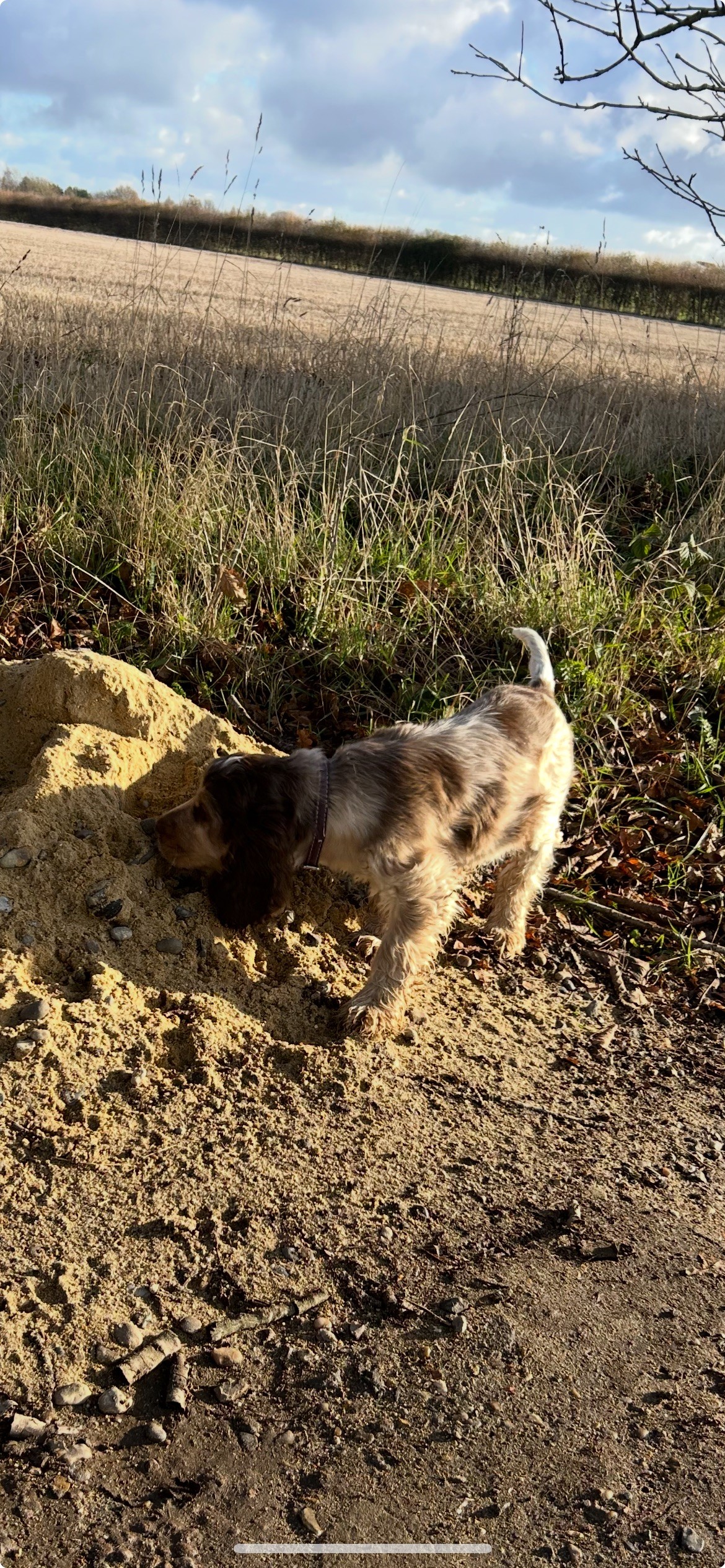
Some fun facts for you:
🐾 Did you know that a dog’s olfactory system is thought to be around 100, 000 times more sensitive than ours?
🐾 Did you know that the structure of their nose means they can breathe normally while taking in new scent, which humans cannot do as we have to breathe in each time? This means they can detect more smells than we can.
🐾 Dogs are trained to do some amazing things for humans including detection of disease, explosives, firearms, drugs and locating missing people.
Is it any wonder our pet dogs are so interested in sniffing? It’s so natural and easy for them and many of our pet dogs are without a sniffing job; they are unemployed!
It can be difficult to get our heads around how sensitive a dog’s olfactory system is. Think about how much you rely on your sight; this is our main way of gathering information. If a person cannot see they are considered to have a disability. For dogs, their primary sense is smell; it’s the reason why dogs tend to adjust so well if they lose their sight.
Dogs see and process the world around them primarily using scent. If we think about our pet dog’s wild ancestry; this was for survival. Wild dogs need their sense of smell in order to live; to find suitable prey, to scavenge for food, to avoid predators and rival territories ,to mark and protect their own territory from others, to navigate the environment, to keep the family unit together, to communicate and reproduce. Dogs even have a specialised part of the nose structure that we don’t, called the “Jacobson’s organ” which allows them to detect and respond to pheromones, which are chemical signals essential in communication. As humans, we do not use scent in the same way.
Our pet dogs carry these same instincts and abilities as the wild dogs they descended from, so it’s central to a dog’s emotional experience in daily life. Restricting them from using their olfactory system easily leads to frustration and stress because it limits their ability to process the world in a way that makes sense to them. Pulling a dog away from an interesting smell can be likened to you having your eyes covered part way through watching a good series or while engrossed in a book. Adolescent dogs, in particular, have a heightened interest in scent because at this stage of development, they have increased social motivation, so exploring the smells left by other dogs is a key way for them to gather social information, learn about their environment, and practice communication.
The part of a dog’s brain dedicated to scent is around 40% larger than ours, reflecting just how important this is to them. They can even ‘detect time’ using scent concentration, knowing how recently a person or dog visited an area.
Sniffing makes our dogs feel good and reduces problems:
When we provide our dogs with sniffing activities, this has both physical and emotional benefits. Sniffing activities stimulate the release of dopamine, oxytocin and endorphins; these are chemicals that make dogs feel happy, engaged and help with bonding to humans. Side effects are confidence, stress reduction and a more engaged dog; what’s not to like?
When humans created the different breeds of dog, we selected them for their ability to do tasks for us. Many of these tasks rely heavily on scent, such as hunting and tracking, guarding livestock and detecting threats to our territories. Many of the dogs that live with us today were bred to work, but find themselves in a pet dog lifestyle where they are unemployed. Working dogs can easily end up with so-called “behaviour problems” because they are unfulfilled and unable to do what they were bred to do; a simple daily walk is rarely enough for them and they need regular opportunities to use their amazing brain. Scent work activities are a great, and easy way to give our dogs a job which helps them to feel fulfilled both physically and mentally alongside those walks.
Scent work is possible for us all:
Most of us have busy lives; we work, we’re trying to raise a family and we have responsibilities, so it might feel impossible to dedicate extra time to your dog. You do not need to do anything complicated, time-consuming or expensive in order to provide opportunities for your dog to use their olfactory system everyday, but it is important to accept that you’ve chosen to bring a canine into your life, and they have unique needs which are essential and not a luxury. Many people will dedicate lots of time to exercising their dog, in an attempt to physically tire their dog, but allow little or no time for training or other activities. Any extra time you can spare, even just 10 minutes, can be used to allow your dog to use their olfactory system.
Here are some easy ideas for you:
Sniffari walk: take your dog outside, preferably somewhere quiet with lots of space to explore, allow them to use their nose and see where they take you! Allow themto sniff each area as long as they like without trying to hurry them along. On these walks; forget about the route you want to do, in order for this to feel like a walk. This can still work if you do not have access to lots of space and can just go to the nearest patch of grass or trees near your home. Aim to havey our dog on a longer lead (so long as you are not close to a road) which allows for freer movement and exploration without putting tension on the lead. Slowdown and try to enjoy this time with your dog; set aside the time so you are not clock-watching. If you have a dog that has been extensively trained to respond to you, they might find it difficult to switch off at first, awaitingcues from you, but you can help them by encouraging them and being interested in your surroundings. Allow your dog to sniff the trees, hedges, grass, lamp posts,any safe objects they come across. Even a familiar route becomes a new adventure when they are allowed to sniff freely.
Food searching games: hide treats in the home or garden. You can use snuffle mats, but you don’t need to, and you can get creative with where you hide the treats, such as using crumpled-up paper and boxes, sprinkling treats into their toy box or onto the grass. Listen for those loud snuffling sounds which show your dog is fully engaged and all of those feel-good chemicals are being activated. This one is good for busy dogs that need help relaxing.
Finding a favourite toy: If your dog is toy-motivated, this works well. Start a game with them(such as tuggy) and then gently hold your dog by the collar while you throw the toy just out of sight, before sending them to find it. You can gradually make this more difficult once your dog understands the task, and you can hide the toy when they are not looking. If your dog finds it too difficult, get involved with the search, enticing your dog to help and then celebrate with enthusiastic praise and a game when you find the prize together! This one is great for bonding.
Your dog’s nose is their superpower, not an inconvenience. If you are struggling with your dog wanting to follow scent, or pulling towards smells on walks, this is totally normal and they are just trying to meet their own needs. It’s in their DNA! Get creative and start having regular time where you enjoy time together, with your dog being encouraged to sniff. A dog who is emotionally, physically and mentally fulfilled will be much easier to train, and much easier to live with.
Blog written by Claire Mcknespiey of Educating Paws


